
Did you know that 95% of homeowners in Australia consider bathroom tiles to be the most important design element in their bathroom renovation projects? Bathroom tiles play a crucial role in the overall aesthetic and functionality of your bathroom space. Choosing the right tiles can elevate the look and feel of your bathroom, while also ensuring long-lasting durability and easy maintenance.
This comprehensive guide will provide you with expert insights and practical tips on selecting the perfect tiles for your bathroom. Whether you’re renovating an existing space or starting from scratch, you’ll learn how to navigate factors like design style, tile size, material, color, and maintenance considerations to achieve your desired bathroom aesthetic and practical outcomes.
Key Takeaways
- Bathroom tiles are a crucial design element that can enhance the overall look and feel of your space.
- Choosing the right tiles requires considering factors such as design style, tile size, material, color, and maintenance needs.
- Porcelain and ceramic tiles are popular choices for high-traffic bathrooms due to their durability.
- Lighter-colored tiles can create the illusion of a larger bathroom, while darker tiles are suitable for larger spaces.
- Grout color and quality can significantly impact the overall look and maintenance of your bathroom tiles.
Introduction
Selecting the right tiles for your bathroom is crucial, as they not only contribute to the overall aesthetic but also play a vital role in functionality, durability, and maintenance. The Bathroom Tile Importance cannot be overstated, as these surfaces endure constant exposure to moisture, temperature changes, and high traffic.
The Tile Selection Process
The Tile Selection Process involves carefully considering various factors to ensure the tiles you choose align with your design preferences, budget, and practical needs. Some key Factors in Tile Selection to consider include:
- Bathroom design style and aesthetics
- Tile size, shape, and layout
- Material durability and water resistance
- Slip resistance for safety
- Ease of cleaning and maintenance
- Coordinating tile colors and patterns
By carefully evaluating these factors, you can make informed decisions and select tiles that not only enhance the visual appeal of your bathroom but also provide long-lasting performance and low-maintenance upkeep.
“Ceramic tiles in Melbourne offer advantages such as ease of cleaning, hypoallergenic properties, and resistance to stains, scratches, and moisture, making them ideal for wet areas like bathrooms and kitchens.”
Ultimately, the Bathroom Tile Importance lies in its ability to transform the look and feel of your bathroom, while also ensuring its functionality and longevity. By following a thoughtful Tile Selection Process and considering the Factors in Tile Selection, you can create a bathroom that not only meets your design aspirations but also provides a practical and enjoyable space for years to come.
Decide on a Bathroom Design Style
Before you start your search for the perfect bathroom tiles, it’s crucial to determine the overall design style you wish to achieve. This decision will significantly impact your Tile Style Selection and how the Coordinating Bathroom Tiles will come together to create a cohesive and visually appealing space.
Common bathroom design styles in Australia include:
- Minimalist – Clean lines, neutral colors, and a focus on functionality.
- Modern – Sleek, contemporary, and often featuring bold, contrasting elements.
- Traditional – Timeless and elegant, with classic design features and natural materials.
- Eclectic – A mix of different styles, textures, and colors to create a unique and personalized look.
Consider the overall style of your home and how the bathroom can seamlessly integrate with the rest of the property. This will help you narrow down your Bathroom Design Styles and tile options, ensuring a cohesive and visually appealing final result.
| Bathroom Design Style | Tile Characteristics |
|---|---|
| Minimalist | Large-format tiles in neutral, muted colors; clean, simple patterns |
| Modern | Sleek, rectangular tiles with sharp edges; bold, contrasting colors |
| Traditional | Natural stone tiles, such as marble or travertine; classic, intricate patterns |
| Eclectic | Mix of tile sizes, shapes, and textures; vibrant, unique color combinations |
“The right tile selection can transform a bathroom from ordinary to extraordinary.”
Choose the Right Tile Size
When it comes to bathroom renovations, the size of the tiles you choose can have a significant impact on the overall look and feel of the space. From floor to walls, selecting the right tile dimensions is crucial for achieving a cohesive and visually appealing design.
Floor Tile Sizes
One of the most popular floor tile sizes for bathrooms is 300x300mm. This size is versatile and can easily be laid with a slope towards the floor waste, ensuring proper drainage. Larger format tiles, such as 300x600mm, are also a popular choice as they can create a more elegant and seamless appearance.
Wall Tile Sizes
For wall tiles, larger formats are generally preferred over smaller tiles. Larger tiles, such as 600x300mm or 600x600mm, can help minimize grout lines and achieve a more cohesive look. This is especially important in smaller bathrooms, where larger tiles can create the illusion of a more spacious environment.
When selecting Bathroom Tile Sizes, it’s important to consider the size of your bathroom and the overall design aesthetic you’re aiming for. Larger tiles can work well in spacious bathrooms, while smaller tiles may be more suitable for compact spaces to avoid making the room appear even smaller.
Ultimately, the right Floor Tile Dimensions and Wall Tile Dimensions will depend on your personal preferences, the size of your bathroom, and the desired look you want to achieve. By carefully considering these factors, you can create a beautiful and functional bathroom that meets your needs.

Limit Tile Varieties for a Cohesive Look
When it comes to creating a visually appealing and cohesive bathroom design, limiting the number of tile varieties is key. While mixing and matching different tiles can add a unique touch, overdoing it can result in a cluttered and overwhelming look. To achieve a harmonious aesthetic, experts recommend using no more than three different tile types in your bathroom.
Start by selecting your floor tiles first, as they will set the foundation for your design. Once you have the floor tiles chosen, you can then pick complementary wall tiles and any accent tiles or feature walls. This approach helps maintain a cohesive flow throughout the space, preventing your bathroom from looking scattered or disjointed.
The Tile Mix and Match, Coordinating Bathroom Tiles, and Tile Variety Considerations are all important factors to keep in mind when selecting your bathroom tiles. By limiting the number of tile varieties, you can create a visually harmonious and aesthetically pleasing bathroom that reflects your personal style.
Remember, the key is to strike a balance between creating visual interest and maintaining a cohesive look. Experiment with different tile sizes, shapes, and textures, but be mindful of not overdoing it. With a little planning and consideration, you can achieve a bathroom that is both stylish and well-coordinated.
Consider Shower Area Tiles
When designing your bathroom, it’s essential to pay special attention to the tiles used in the shower area. These tiles not only contribute to the overall aesthetic but also play a crucial role in ensuring safety and functionality.
Anti-Slip Tiles
One of the primary considerations for shower area tiles is their slip resistance. Opt for anti-slip bathroom tiles that provide a secure and stable surface, reducing the risk of accidents and falls. These tiles often have a textured or matte finish, which helps to grip the surface and prevent slippery conditions.
Seamless Look
Creating a seamless shower design can elevate the overall aesthetic of your bathroom. By using the same tiles in the shower area as the rest of the bathroom, you can achieve a cohesive and visually appealing look. Alternatively, you can use a contrasting tile to make the shower area a focal point, adding depth and interest to the space.
When selecting tiles for your shower area, consider factors such as durability, water resistance, and ease of cleaning. Bathroom shower tiles should be able to withstand the constant exposure to moisture and steam without compromising their appearance or functionality.
| Tile Type | Slip Resistance | Moisture Resistance | Ease of Cleaning |
|---|---|---|---|
| Porcelain Tiles | High | Excellent | Easy |
| Ceramic Tiles | Moderate | Good | Easy |
| Natural Stone Tiles | Varies | Requires Sealing | Moderate |
By carefully considering the tiles used in the shower area, you can create a functional and visually appealing bathroom that meets your unique design preferences and safety requirements.
Choosing the Right Tiles for Your Bathroom
When it comes to Bathroom Tile Selection, the Tile Choosing Process involves carefully considering various Tile Decision Factors. The size and layout of your bathroom, the overall design style, the level of foot traffic, and the amount of moisture the tiles will be exposed to are all crucial elements to take into account.
Regarding tile materials, the options range from porcelain and ceramic to glass, concrete, and natural stone. While a maximum of three feature tile varieties is recommended to avoid a busy look, larger format tiles can create an illusion of space in small bathrooms. Conversely, mosaic tiles may increase grout lines significantly, impacting the overall aesthetic.
| Tile Material | Durability | Maintenance | Suitable Areas |
|---|---|---|---|
| Porcelain | High | Low | Floors, Walls |
| Ceramic | Moderate | Easy | Walls |
| Natural Stone | High | High | Floors, Walls |
| Glass | High | Moderate | Walls, Accent Pieces |
Additionally, factors such as slip-resistance, maintenance requirements, and the overall aesthetic should be considered when selecting tiles for your bathroom. Porcelain tiles may require a non-slip coating due to their smooth surface, while natural stone tiles need regular resealing. The effort needed to maintain the bathroom should also be a key factor in your tile decision.
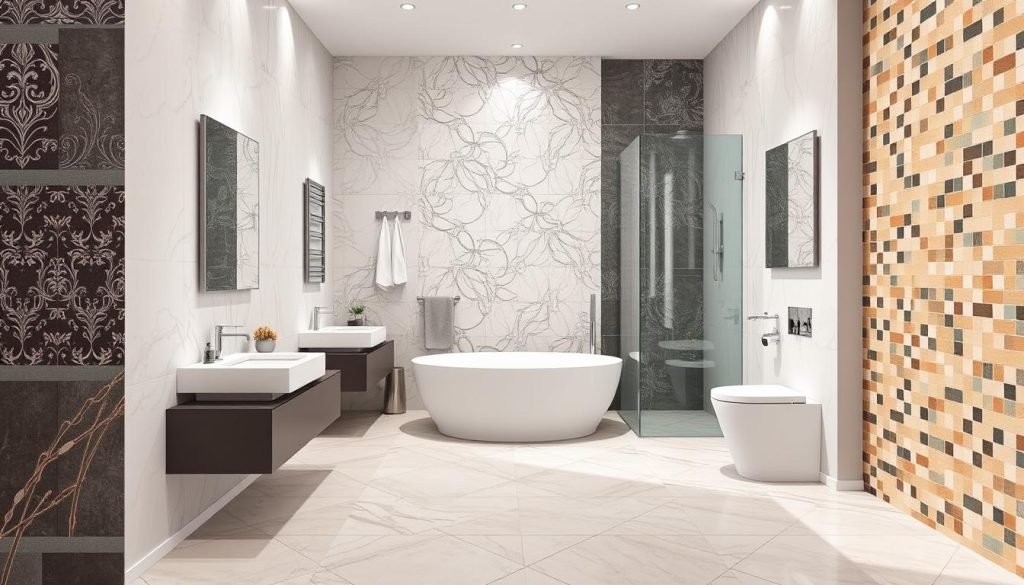
Ultimately, choosing the right tiles for your bathroom is a balance of functionality, durability, and personal style preferences. By carefully evaluating these Tile Decision Factors, you can create a beautiful and practical bathroom that meets your needs and enhances the overall design of your home.
Tile Material and Maintenance
When it comes to your bathroom tiles, the material you choose can significantly impact their durability, appearance, and maintenance requirements. Two of the most popular options for bathrooms are porcelain and ceramic tiles, as well as natural stone tiles. Each type of tile has its own unique benefits and considerations.
Porcelain and Ceramic Tiles
Porcelain and ceramic tiles are renowned for their water resistance, easy maintenance, and wide range of design options. These tiles are durable, scratch-resistant, and can withstand the moisture-rich environment of a bathroom. Porcelain tiles are particularly known for their superior durability and stain resistance, making them a top choice for bathroom floors and walls. Ceramic tiles, on the other hand, offer more affordable options and a diverse selection of colors, patterns, and textures to suit your bathroom’s aesthetic.
Natural Stone Tiles
Natural stone tiles, such as marble, travertine, and granite, offer a unique and high-end look for your bathroom. These tiles can add warmth, character, and a touch of luxury to your space. However, natural stone tiles require more specialized care and maintenance to prevent staining and damage. They need to be sealed regularly to protect against water and moisture, and may be more prone to cracking or chipping compared to porcelain or ceramic tiles.
When selecting bathroom tiles, it’s important to consider the material’s durability, maintenance requirements, and how it aligns with your overall design vision. Porcelain and ceramic tiles are often a practical and low-maintenance choice, while natural stone tiles can add a touch of elegance and sophistication to your bathroom.
Tile Color and Lighting
When it comes to choosing the right tiles for your bathroom, the color can have a significant impact on the overall look and feel of the space. In smaller bathrooms, light-colored tiles can create an illusion of a larger, more open area. Light colors like white, beige, or soft gray can reflect natural light, making the room appear brighter and more spacious.
On the other hand, bold or darker tile colors can work well in larger bathrooms, adding depth and visual interest to the design. These hues, such as deep blues, rich greens, or elegant blacks, can create a cozy and inviting atmosphere, perfect for a spa-like retreat.
It’s important to consider how the tile color will interact with the lighting in your bathroom, as this can significantly impact the perceived appearance of the tiles. Sampling different tile options in your bathroom under various lighting conditions can help you make an informed decision that perfectly complements your space.
| Tile Color | Bathroom Size | Lighting Considerations |
|---|---|---|
| Light Colors (White, Beige, Gray) | Small Bathrooms | Reflect natural light, create an illusion of a larger space |
| Bold or Darker Colors (Blue, Green, Black) | Larger Bathrooms | Add depth and visual interest, create a cozy, spa-like atmosphere |
By carefully considering the interplay between Bathroom Tile Color, Tile Color and Lighting, and Tile Color Considerations, you can create a harmonious and visually appealing bathroom design that reflects your personal style and meets your functional needs.
Grout Color Considerations
When selecting tiles for your bathroom, the color of the Bathroom Tile Grout can play a crucial role in the overall aesthetic. While the grout doesn’t always have to match the tile color, considering how the two will work together is essential. Matching Grout and Tile Coordination can create a cohesive and seamless look, while contrasting colors can add definition and visual interest to the tile pattern. Additionally, darker Grout Color Selection can be more effective at hiding stains and discoloration over time.
Popular grout color options include classic choices like black, gray, and white, as well as more vibrant hues such as beige, brown, tan, blue, and green. Neutral grout shades like tan, beige, gray, and cream are perennial favorites among homeowners and designers for their versatility.
When it comes to Bathroom Tile Grout, the undertone of the tile is crucial to consider to ensure the grout and tile colors complement each other. Darker grout is practical for high-traffic areas as it hides dirt well, while lighter grout may require sealing for easier maintenance.
Ultimately, testing out grout colors on a small section of tile before application is essential to ensure the desired look is achieved. Grout that requires water addition can lead to varying colors due to curing and other factors, while urethane and epoxy grouts produce more consistent coloring.
Bathroom Renovations Brightoncan help youGrout Color Selectionand coordinate theGrout and Tile Coordinationto create a stunning and functional bathroom.
“Grout color can make or break a bathroom tile design. It’s important to carefully consider how the grout will complement the tile and the overall look you’re trying to achieve.”
Bathroom Tile Trends and Inspiration
Bathroom tile design is an ever-evolving field, with new Bathroom Tile Trends and Tile Style Ideas emerging regularly. Staying up-to-date with the latest Tile Design Inspiration can help you create a visually stunning and on-trend bathroom space. From geometric patterns and large-format tiles to textured surfaces and bold, vibrant colors, the world of bathroom tiles offers a wealth of design possibilities.
According to industry experts, patterned tiles are predicted to remain popular in 2023, with designers combining different shapes and colors to create stunning, artistic designs. Contrasting elements, high-contrast color schemes, and playful tile layouts like herringbone or off-kilter patterns are also gaining traction, adding visual interest and personality to bathroom spaces.
Warm hues, such as blues, pinks, and greens, are currently trending alongside the classic grays and beiges, while metallic-effect tiles, particularly in gold and copper, are being used to achieve a luxurious, high-end look. Brightly colored, contrasting grout is also emerging as a decorative feature, providing a unique touch to bathroom designs.
For a timeless appeal, textured tiles, including concrete-look and natural stone options like Carrara, Calacatta, and Statuario marble, continue to be popular choices among homeowners and designers alike. These materials not only add visual interest but also contribute to the overall ambiance of the bathroom.
Whether you’re drawn to the clean lines of geometric patterns, the warmth of earthy tones, or the luxurious sheen of metallic-effect tiles, the world of Bathroom Tile Trends and Tile Design Inspiration offers endless possibilities to create a truly unique and visually captivating bathroom oasis.
Conclusion
Selecting the right tiles for your bathroom is a crucial step in achieving your desired design and functionality. By considering factors such as Bathroom Tile Selection Summary, Choosing Tiles for Bathrooms, and Tile Decision Factors, you can make informed decisions that will create a beautiful, durable, and low-maintenance bathroom space.
Remember to limit the number of tile varieties, pay special attention to the shower area, and stay up-to-date with the latest bathroom tile trends to ensure your bathroom renovation is a success. With the right tile selection, you can transform your bathroom into a functional and visually appealing haven that reflects your personal style.
Whether you prefer the affordability and versatility of ceramic tiles, the durability and water-resistance of porcelain tiles, or the elegant charm of natural stone tiles, there is a tile option that can meet your needs and budget. By considering factors like size, color, and maintenance requirements, you can create a cohesive and harmonious bathroom design that will stand the test of time.