
Did you know that the average Australian home uses nearly 40% of its total energy consumption on lighting? When it comes to bathroom lighting, the stakes are even higher, as improper illumination can pose safety risks and hamper crucial grooming tasks. But fear not, this comprehensive guide is here to shed light on the world of bathroom lighting and help you create a functional, energy-efficient, and visually appealing space.
Key Takeaways
- Bathroom lighting is divided into specific zones with unique IP rating requirements for safety and functionality.
- Leveraging different lighting techniques, such as ambient, task, and accent lighting, can enhance the overall ambiance and usability of your bathroom.
- Energy-efficient LED lighting solutions offer significant cost savings and environmental benefits compared to traditional incandescent bulbs.
- Proper placement and color temperature of vanity lights are crucial for grooming tasks and creating a relaxing atmosphere.
- Addressing the unique lighting needs of small bathrooms and wet rooms requires specialized planning and product selection.
What Are the Different Types of Bathroom Lighting?
When it comes to designing the perfect bathroom, lighting is a crucial element that can make a significant impact on both the functionality and ambiance of the space. Bathrooms typically require a combination of three main types of lighting: general lighting, task lighting, and accent lighting. Understanding the purpose and benefits of each can help you create a well-balanced and visually appealing lighting scheme.
General Lighting
General lighting provides the overall illumination for the bathroom, ensuring adequate brightness throughout the room. This type of lighting is typically achieved through the use of wall-mounted fixtures, recessed downlights, or a combination of both. [General lighting] is essential for everyday tasks, such as grooming and cleaning, as well as for creating a welcoming atmosphere.
Task Lighting
Task lighting is designed to illuminate specific areas of the bathroom where focused illumination is required. The most common example is [vanity lighting], which ensures ample light for activities like shaving, applying makeup, or dental hygiene. [Task lighting] can be adjustable and strategically placed to provide the necessary brightness for specific tasks.
Accent Lighting
Accent lighting, also known as [mood lighting], is used to create visual interest and ambiance within the bathroom. This type of lighting can be achieved through the use of LED strips, recessed lighting, or decorative wall sconces. Accent lighting is primarily used for its aesthetic appeal, helping to set the desired mood and complement the overall design of the space.
By carefully considering the different types of [bathroom lighting] and how they work together, you can create a harmonious and functional lighting scheme that enhances the overall beauty and usability of your bathroom.
Understanding IP Ratings and Zoning for Bathroom Lighting
When it comes to bathroom lighting, safety and functionality are paramount. The IP (Ingress Protection) rating system is a crucial consideration that ensures your bathroom lighting fixtures are properly equipped to withstand the unique environment of a bathroom.
IP Ratings Explained
The IP rating system uses two digits to indicate the level of protection a lighting fixture offers against solid objects, dust, and moisture. The first digit represents protection against solid objects, ranging from 0 (no protection) to 6 (complete protection against dust). The second digit represents protection against water, ranging from 0 (no protection) to 8 (continuous submersion under defined conditions).
For outdoor lights, it’s recommended to use at least an IP65 rating for protection against dust and low-pressure water jets. However, in the bathroom, the IP rating requirements are more specific.
Bathroom Lighting Zones
Australia’s building codes define different bathroom lighting zones with specific IP rating requirements for each zone:
- Zone 0: This includes the inside of the bath and shower cubicle, which requires a minimum IP67 rating.
- Zone 1: This covers the area above the bath and shower up to 2.5 meters from the floor, which requires a minimum IP44 rating.
- Zone 2: This extends 60cm outside the bath and shower, and up to 2.25 meters above the floor, which also requires a minimum IP44 rating.
Outside of these defined zones, there is no specific minimum IP rating requirement, but it’s recommended to use at least IP44+ rated lights for overall bathroom illumination.
Understanding these IP rating requirements and bathroom lighting zones is crucial when selecting and placing lighting fixtures in your bathroom. Ensuring your lighting meets the appropriate standards will not only keep you safe but also provide the necessary protection against the moist environment.
Lighting Requirements for Wet Rooms
Wet rooms, which are becoming increasingly popular in Australian homes, have unique lighting requirements. When planning the lighting for a wet room, it’s crucial to consider the need for additional waterproofing, the placement of switches and fixtures, and the elimination of the need for separate shower lighting.
Wet rooms simplify the lighting design process by creating an open, cohesive space that eliminates the need for distinct lighting zones. However, this also requires extra planning and safety precautions to ensure the lighting is both functional and compliant with relevant bathroom renovation guidelines.
IP Ratings and Zoning
The bathroom lighting in a wet room should have a minimum IP Rating of IP44, offering protection against particles larger than 1mm in size and water splashes. For areas inside the bath or shower cubicle (Zone 0), a minimum IP Rating of IP67 is required.
- Zone 1 areas, such as the vertical space from the edge of the bath up to 2.5m above the floor, require bathroom lighting with an IP Rating of IPx4 or above.
- In Zone 2, which covers a 0.6-meter perimeter around the bath, shower, sinks, and vanity areas, lights with an IP Rating of IPx4, 12V lights, or recessed ceiling lights are mandated.
It’s important to note that beyond the specified zones, there is no minimum IP Rating requirement, but it’s recommended to use IP44+ rated lights for all bathroom lighting.
| Zone | IP Rating Requirement |
|---|---|
| Zone 0 (Inside bath/shower) | IP67 |
| Zone 1 (Edge of bath to 2.5m above floor) | IPx4 or above |
| Zone 2 (0.6m perimeter around bath, shower, sinks, and vanity) | IPx4, 12V lights, or recessed ceiling lights |
By understanding the IP Rating and zoning requirements, you can ensure your wet room lighting is both functional and compliant with safety standards.
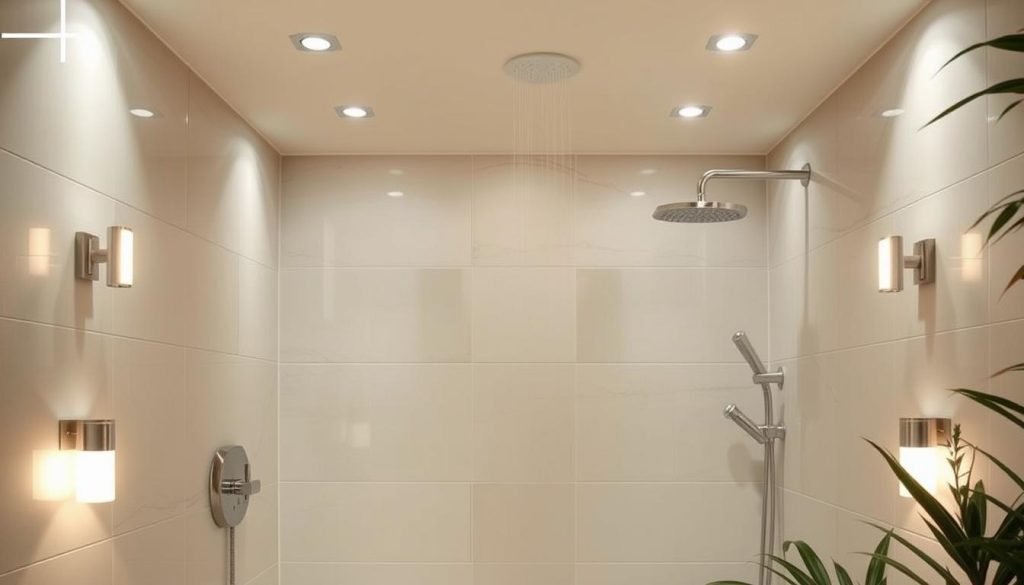
Wet rooms eliminate the need for specific lighting in areas such as showers and baths, serving as open spaces that often require extra planning due to increased water exposure. Consulting with a licensed electrician is essential to ensure your wet room lighting installation meets all relevant safety regulations and building codes.
The Ultimate Guide to Bathroom Lighting
When it comes to transforming your bathroom, proper lighting can make a significant impact. This comprehensive guide delves into the different types of bathroom lighting, their functions, and the essential factors to consider for a well-lit and visually appealing space. Whether you’re planning a full bathroom renovation or simply seeking to enhance your current setup, this guide will equip you with the knowledge to make informed decisions.
Lighting Types and Purposes
Bathroom lighting can be categorized into three main types: general lighting, task lighting, and accent lighting. General lighting provides the overall illumination, creating a bright and welcoming atmosphere. Task lighting, on the other hand, is focused on specific areas like the vanity, shower, or bathtub, ensuring visibility and safety for daily routines. Accent lighting, meanwhile, adds a decorative touch, highlighting architectural features or creating a soothing ambiance.
Navigating IP Ratings and Zoning
When selecting bathroom lighting, it’s crucial to understand IP (Ingress Protection) ratings and zoning. IP ratings indicate the level of protection against water and dust, with higher ratings ensuring greater resistance. Bathroom renovations in Brighton experts recommend a minimum IP44 rating for bathroom lighting to ensure safe and reliable performance. The bathroom is divided into different zones, each with specific IP rating requirements to prevent the risk of electrical hazards.
Lighting for Wet Rooms
Wet rooms, with their open layouts and seamless transitions between the shower and the rest of the bathroom, require special attention when it comes to lighting. Waterproof and sealed lighting fixtures are essential to maintain safety and prevent water damage. Recessed spotlights and wall-mounted fixtures are popular choices for wet room illumination, providing both task and accent lighting.
| IP Rating | Protection Level |
|---|---|
| IP0 | No protection |
| IP1 | Protected against vertically falling water drops |
| IP2 | Protected against vertically falling water drops at an angle of 15° |
| IP3 | Protected against water spraying up to a 60° angle on either side |
| IP4 | Protected against sprays of water from any angle |
| IP5 | Protected against low pressure water jets from any angle |
| IP6 | Protected against high pressure water jets from any angle |
| IP7 | Protected against submersion in water for 30 minutes to a depth of 1m |
| IP8 | Protected against continuous submersion in water to a depth of 3m |
Remember, when it comes to bathroom lighting, it’s always best to consult with professional bathroom renovation experts in Brighton to ensure compliance with safety regulations and optimal design solutions for your specific needs.
Lighting a Bathroom Vanity Mirror
When it comes to bathroom design, proper lighting for the vanity mirror is crucial. Achieving the right balance of illumination can make all the difference in creating a flattering, functional, and visually appealing space. Whether you’re shaving, applying makeup, or simply getting ready for the day, the lighting around your bathroom vanity lighting and vanity mirror lighting plays a vital role.
Ideal Placement
For optimal results, bathroom vanity lighting is best positioned on either side of the mirror, rather than above it. This configuration provides even, shadow-free illumination, ensuring your reflection is evenly lit and your features are accurately highlighted. Wall-mounted sconces or pendant lights flanking the mirror are a popular and effective choice.
Color Temperature
The color temperature of your vanity lighting is another important consideration. Aim for a warm, neutral tone between 2700K and 3000K, which typically provides a flattering, relaxing ambiance. Avoid harsh, blue-tinted lights, as they can create unflattering shadows and an unflattering appearance. By selecting the right color temperature, you can create a soothing, spa-like atmosphere in your bathroom.
Integrating the right bathroom vanity lighting and vanity mirror lighting solutions can truly elevate the functionality and aesthetic of your bathroom. By understanding the ideal placement and color temperature, you can achieve a beautifully illuminated space that enhances your daily routine and overall bathroom experience.
Bathroom Lighting for Small Spaces
Lighting a small bathroom can be a challenging task, but with the right approach, you can create a warm, inviting, and functional space. One of the key strategies is to use pendants that draw the eye upward, especially in rooms with high ceilings. This helps to create the illusion of a larger, more open feel. Avoid wall lights that take up valuable space, and instead, focus on reflective surfaces and dimmers to maximize the impact of a single light fixture.
Incorporating natural light is another important consideration for small bathrooms. Strategically placed windows or skylights can instantly brighten up the space and create a more welcoming atmosphere. If natural light is limited, consider using light-colored tiles, mirrors, and other reflective surfaces to bounce the available light around the room.
Layering Lighting for Small Bathrooms
To create a well-lit and visually appealing small bathroom, it’s important to layer different types of lighting. This includes a combination of:
- Ambient lighting from ceiling-mounted fixtures or pendants to set the overall mood
- Task lighting around the vanity area for activities like grooming and makeup application
- Accent lighting to highlight specific features or architectural elements
By incorporating these different lighting layers, you can ensure that your small bathroom is both functional and visually striking.
| Lighting Type | Purpose | Recommended Fixtures |
|---|---|---|
| Ambient | Sets the overall mood and illumination | Ceiling lights, pendants, recessed lighting |
| Task | Provides focused light for activities like grooming and makeup application | Wall sconces, vanity lights, lighted mirrors |
| Accent | Highlights specific features or architectural elements | Recessed lighting, strip lighting, wall wash lighting |
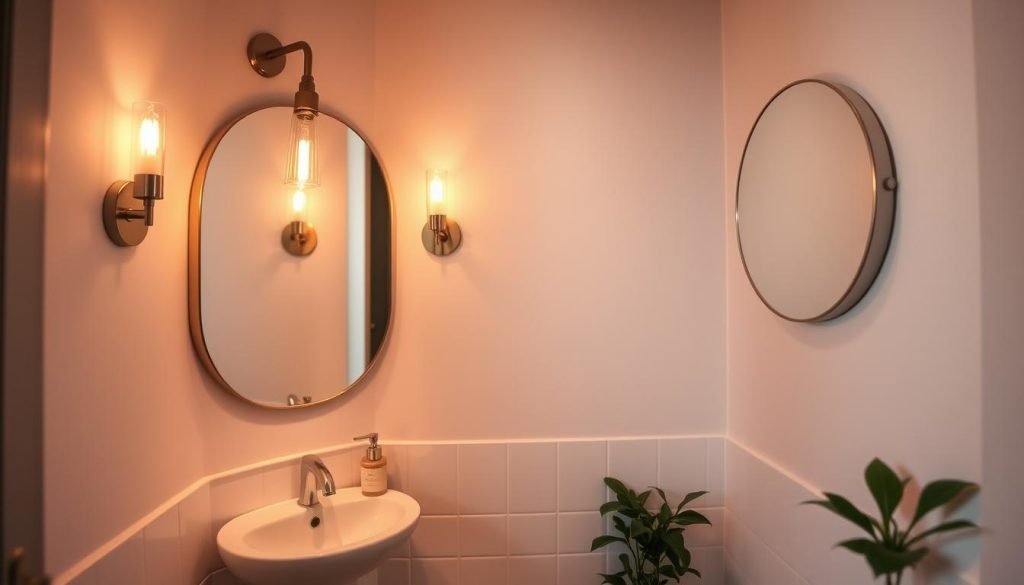
By following these strategies, you can create a well-lit and visually appealing small bathroom that is both functional and inviting. Whether you’re renovating an existing space or designing a new one, bathroom lighting can make a significant difference in the overall look and feel of the room.
Choosing the Best Bathroom Lighting
Creating a well-lit and versatile bathroom requires careful consideration of the different lighting options available. The key to achieving the best bathroom lighting is to incorporate a comprehensive, flexible lighting plan that combines soft, ambient lighting with brighter task lighting to accommodate various functions and moods.
One of the most effective ways to achieve this is by using a mix of general lighting, task lighting, and accent lighting. General lighting, such as a central ceiling fixture, provides overall illumination for the entire space. Task lighting, like vanity or mirror lighting, helps with specific activities like grooming and applying makeup. Accent lighting, such as decorative wall sconces or recessed lights, can be used to highlight architectural features or create a warm, inviting atmosphere.
When choosing the best bathroom lighting, it’s important to consider the Australian Lighting Bathroom Requirements, which outline the correct placement of bathroom lights and describe the type of lights that should be used. Additionally, understanding IP ratings and bathroom lighting zones is crucial to ensure the safety and functionality of your lighting system.
For a truly customizable and energy-efficient lighting solution, LED lights are an excellent choice. These long-lasting, low-maintenance fixtures can be easily integrated into your bathroom design, and they offer a wide range of color temperatures and lumen outputs to suit your specific needs.
By carefully selecting the right combination of general, task, and accent lighting, you can create a bathroom lighting plan that is both functional and aesthetically pleasing, helping to enhance the overall ambiance and usability of your bathroom space.
Common Bathroom Lighting Mistakes to Avoid
Designing an efficient and visually appealing bathroom lighting scheme can be a delicate balance. While many homeowners strive to create a functional and stylish bathroom, common mistakes can easily undermine their efforts. By understanding these pitfalls, you can ensure your bathroom lighting is both practical and aesthetically pleasing.
One of the most prevalent errors is placing lights in the center of the room. This approach often results in unflattering shadows and uneven illumination, particularly around the vanity area where task lighting is crucial. Instead, strategic placement of fixtures, such as wall sconces or vanity lights positioned at eye level on both sides of the mirror, can provide balanced and flattering lighting.
Another common mistake is the use of cool or daylight-colored light. While these color temperatures may appear bright, they can create a harsh, clinical atmosphere that is far from inviting. Opt for a warmer color temperature, between 3000K and 4500K, to achieve a more soothing and relaxing ambiance.
Relying solely on decorative wall lights that lack functional illumination is another pitfall to avoid. While these fixtures can enhance the aesthetic appeal of your bathroom, they should be paired with adequate task lighting to ensure the space is well-lit and practical for daily activities like grooming and makeup application.
By steering clear of these common bathroom lighting errors, you can create a harmonious and functional space that not only looks visually appealing but also meets your practical needs. Remember, a well-designed bathroom lighting plan is essential for both form and function.
Conclusion
As you’ve discovered, crafting a well-designed bathroom lighting scheme requires careful planning and consideration of various factors. From understanding IP ratings and zoning requirements to selecting the right mix of general, task, and accent lighting, the guidance provided in this comprehensive guide can help transform your Australian bathroom into a functional and visually appealing space.
By prioritizing safety and regulatory compliance, incorporating energy-efficient LED technology, and incorporating both ambient and task-specific lighting, you can create a harmonious and versatile lighting solution that enhances the overall aesthetic and usability of your bathroom. Remember to consider factors like color temperature, dimmability, and the strategic placement of illuminated mirrors and vanities to achieve the desired atmosphere and meet your specific needs.
With the insights gained from this guide, you’re now equipped with the knowledge to make informed decisions and avoid common lighting pitfalls. Embrace the opportunity to elevate your bathroom’s design and functionality, and enjoy the transformative power of well-planned lighting that truly elevates your daily grooming and relaxation routines.